
MEET DR. PENHOLLOW
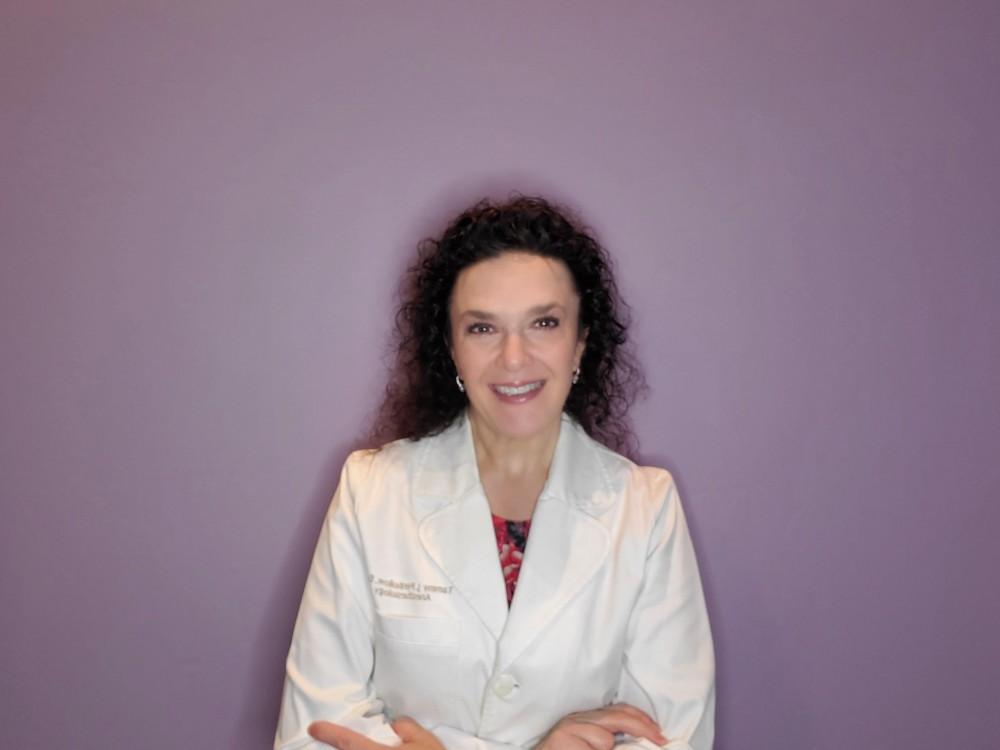
Hi, I’m Dr. Tammy Penhollow.
I became a physician because I made a decision at age nine: I wanted to take care of people. That childhood desire never left me, and every step of my medical career has strengthened that calling.
I chose pain medicine while serving on active duty in the Navy. I was stationed in San Diego teaching independent duty corpsmen when 9/11 happened. As wounded service members were airlifted back to the U.S. every week, I knew my purpose was to serve them in the most meaningful way I could, through anesthesiology and pain medicine. That decision shaped my entire career.
But over time, I realized the traditional spine and pain model (seven-minute visits, endless prescriptions, destructive procedures like corticosteroid injections and radiofrequency ablation) did not align with who I was or how I wanted to care for patients. In 2015, I walked away from that model entirely.
Today, my practice is built on constructive, regenerative, image-guided care for the spine and joints. Patients tell me, time and again, that they feel heard for the first time. They appreciate that I explain complex medical situations with candor and transparency. And they value that I partner with them rather than push them.
My philosophy is simple:
Patients deserve accuracy, honesty, and care that strengthens (not weakens) the body.



My Training Story
My medical career started in Kosovo in 1999, just after I finished internship. My Mobile Construction Battalion was deployed to a war-torn region to help rebuild schools, roads, and infrastructure. Caring for service members in that environment shaped my understanding of resilience, leadership, and responsibility; lessons that still guide my work today.
A few years later, I completed anesthesiology residency at what was then National Naval Medical Center/Walter Reed Army Medical Center (now Walter Reed National Military Medical Center). I cared for active-duty members, families, and wounded warriors. The complexity and severity of the conditions I treated there taught me to think beyond single-target injections and to consider the full biomechanical system.
After separating from the Navy I completed Pain Medicine fellowship at Stanford, which had a profound impact on me. Our patients were among the most challenging in the country. They spent an hour with the pain physician, then several hours with physical therapy and pain psychology – a multidisciplinary model that reaffirmed something I had long believed: a true consultation cannot be done in a rushed format. Patients deserve thoughtful evaluation, time to tell their story, and careful diagnostic work before any treatment plan is made.
When I saw the gap between traditional pain medicine and what patients truly needed, I pursued regenerative orthobiologics. I wanted to build a practice where precision, ethics, and clarity were non-negotiable.
My Philosophy: How I Think About Regenerative Medicine
Accuracy and precision matter
If you don’t hit the right targets with biologic treatment, you can’t expect the body to respond the way it should. Good intentions don’t create good outcomes. Accuracy does.
Image guidance matters
You can’t treat what you can’t see. Studies repeatedly show that even experienced orthopedic surgeons miss their targets without imaging. Precision requires visualization.
Single-target injections fail
The body is not a single-point system. A knee is not just a joint space: it’s ligaments, tendons, cartilage, fascia, and the entire kinetic chain. The spine is not just a disc: it’s the disc, facets, ligaments, nerves, epidural space, paraspinal muscles, fascia. If you treat only one structure, you often miss the true source of dysfunction.
System-based treatment works
I treat the knee and shoulder the same way I treat the spine; as an organ system with interdependent parts. When you treat the system, you respect how the body actually works.
Patients deserve no-hype, no-pressure care
Regenerative medicine has become confusing, predatory, and often misleading. Patients deserve honesty, clarity, and partnership, not sales tactics. They deserve to know the “why” before the “what.”
I reject birth-tissue and so-called “stem cell” marketing
These products do not contain living stem cells, and they are not legal for orthopedic use in Arizona or most of the United States outside of FDA-registered trials. I only use autologous, patient-derived biologic therapies like PRP, BMAC, and mFAT, because they align with the science, the law, and my ethics.
Diagnosis comes before treatment
You would never cook with a blindfold on. You cannot treat patients without knowing exactly what you are treating. Everything begins with diagnosis.
A Little About Me
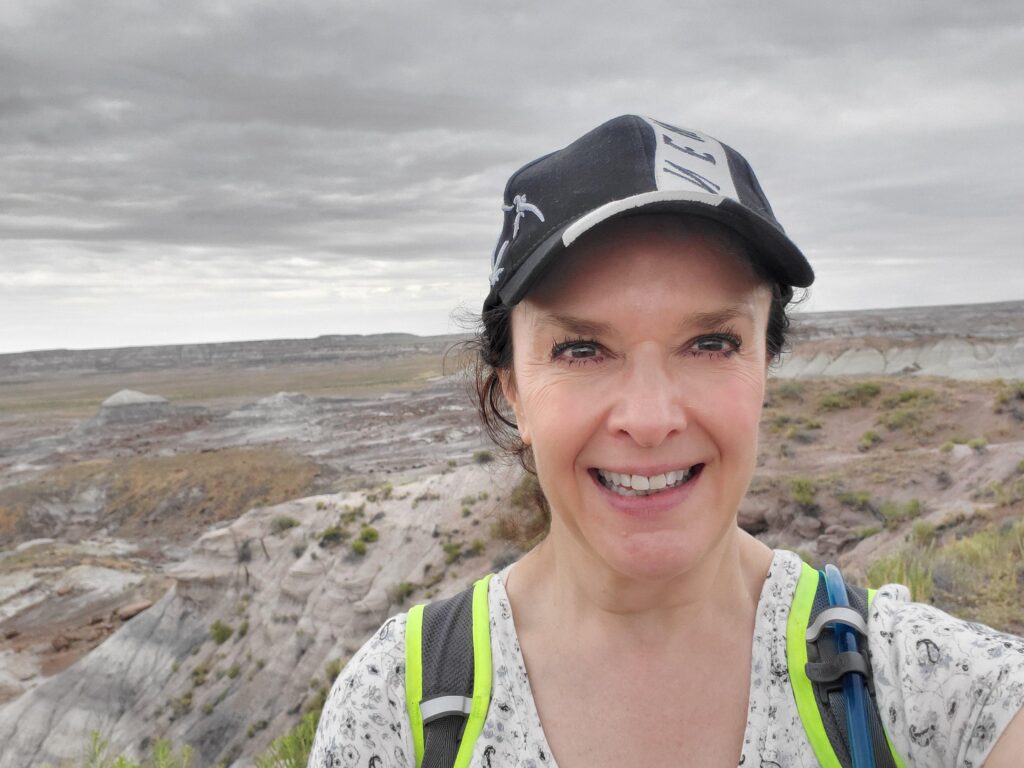
Hiking grounds me. It puts everything in perspective and reminds me I’m just one small part of a much bigger world. Movement is medicine for me personally, and I practice what I preach.
My favorite place to hike is Sedona. It’s magical, peaceful, and only 90 minutes away. We also have beautiful trails right near our home, and I take advantage of them as often as I can.
A fun detail? I’m a home chef. I took a 26-week classical culinary course, and I love opening my pantry and creating something from scratch. Cooking is creative, restorative, and joyful for me, much like movement.
Why I Teach and Train
I’m a teacher at heart. I teach my patients, I teach my peers, and I believe sharing knowledge is part of serving something larger than myself. Elevating the field elevates patient care – and that is what drives me.

Credentials Snapshot
Training & Background
US Navy trained at National Naval Medical Center/Walter Reed Army Medical Center
Stanford Pain Medicine Fellowship
Board-certified in Anesthesiology & Pain Medicine
Served active duty in Kosovo, Guam, San Diego, Okinawa, Djibouti, and Rota, Spain.
Tens of thousands of image-guided spine and joint procedures
Regenerative Medicine Expertise
Autologous biologics only: PRP, BMAC, mFAT
Spine: discogenic pain, degenerative disc disease, facet pain, sacroiliac joint dysfunction, epidural biologic injections
Joints: knee, hip, shoulder, elbow, wrist/hand, foot/ankle
Branded programs: Tower of Power Spine™, Joint Boost System™
Leadership & Education
Faculty/advisory roles with TOBI, APEX Biologix
Physician trainer for EmCyte BioEdge (1–3 physician cohorts)
Speaker at national conferences and medical societies
Podcast: Mobilize & Energize
Newsletter: The Stem Cell Times
If you feel unheard, stuck, or uncertain about your next steps, I’m here to help. My practice is built on precision, partnership, and personalized care.
Or call my office at